
Moving day usually feels like a challenge. The moment you see the endless pile of mattresses, appliances, packed boxes and random outdoor gear ready to be moved, the moving day feels even bigger. Moving day requires you to bring in professionals. It helps you to prepare for what exactly happens the second the truck pulls up. That way you are not left confused about what to do next. Not everyone understands what happens once the moving team arrives at their property.
Do removalists check the driveway first? How do they decide where to park the truck? What takes place before furniture is carried out? How do they work out which items need protective wrapping?
At Movers in Melbourne we believe knowing the process helps customers feel more ready and confident. While every move is not the same, professional removalists mostly follow an order: provide an arrival update, check the access, prepare the truck, walk through the property with the customer and plan the secured and most efficient way to move the items.
Here is what customers can expect from the moment a removalist team arrives until the loading process starts.
1. The Team Usually Provides an Arrival Update
Before arriving at the location of the house the removalists will inform the customer to let them know they are on their way. It’s important for them to provide 30 minutes’ notice when possible. This gives the customer time to finish getting open gates, secure pets, clear paths and get set for the team’s arrival.
For example a customer might receive a call or text saying the team is on the way and expected to arrive in half an hour. This small detail matters. Moving day mostly involves coordination with real estate agents, building managers, family members, tenants or property owners. An arrival update helps everyone know when the move is about to begin.
Important: Actual arrival times can change due to traffic, parking issues, the job or other factors. A professional team should tell the customer as soon as possible if there's a significant delay.
2. The First Property Assessment Often Starts Outside
When the team arrives the first thing they do isn’t always take furniture out. The driver or senior member will usually check the property’s access. Fix the location where the truck can be parked safely.
They may look at:
- The driveway entrance
- The width of the driveway
- Whether the driveway is steep or sloped
- Clearance around gates, fences and buildings
- Street parking conditions
- The distance between the truck and the front door
- Potential obstacles like trees, poles or low branches
- Whether the truck’s tailgate can be used safely
This initial check helps the team pick a parking spot and avoid risks to the property, the truck and the customer’s belongings.
Why Does Driveway Access Matter?
Not every driveway plays nice with a moving truck. A spot that feels totally fine for a standard car can quickly turn into a headache for a heavy truck with a low-hanging tailgate—whether it's too steep, tight, or angled awkwardly.
If the slope looks too risky, our team will usually park out on the street instead. Stepping a heavy truck too far up a steep driveway can bottom out the rear step or tailgate mechanism, causing serious damage to the truck and scraping up your concrete in the process. Parking on the road keeps everything safe and gives us a flat surface to lower the ramp without any issues.
Choosing a Spot Reduces That Risk
On a suitable driveway the team may be able to park closer to the house. This can shorten carrying distances. Make loading faster.
The point: The closest parking position is not always the safest one. Experienced removalists think about both access and safety before deciding where to park.
3. The Truck Is Prepared for the Move
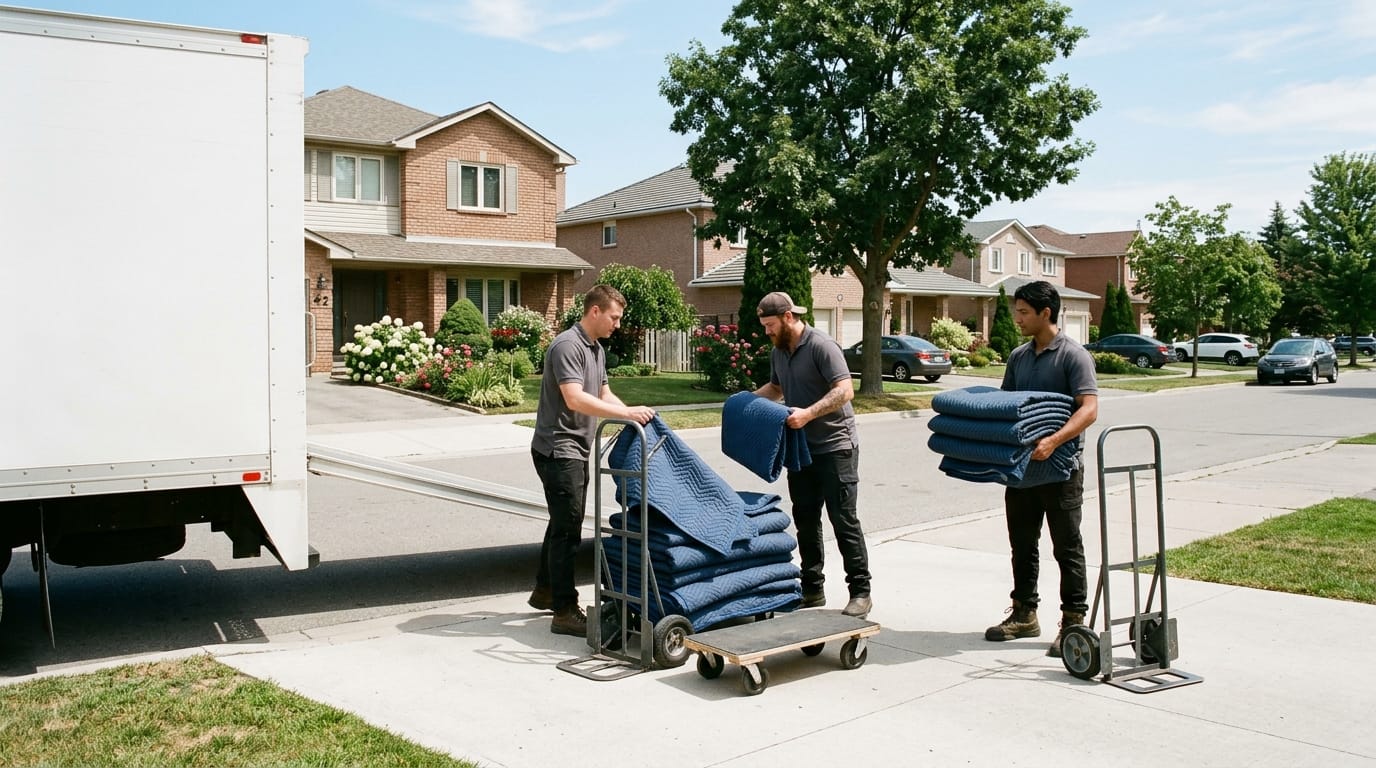
Once the parking spot is chosen the team begins preparing the truck and equipment. The driver or senior team member will direct the jockey or crew member to unload the tools needed for the move. This can include:
- Furniture removal blankets
- Dollies
- Trolleys
- Straps
- Lifting equipment
- Wrapping materials
- Other moving tools required for the job
The blankets are usually taken out and kept in order so they’re ready to protect furniture. Dollies and trolleys are prepared to help move bulky items more safely and easily.
This preparation is important because moving isn’t about lifting furniture. The team needs to have the tools available before loading starts. A prepared truck also allows the crew to work in an organised way without needing to go back to the truck repeatedly to find equipment.
4. The Driver Walks Through the Property With the Customer
After the truck and equipment are ready the driver or senior removalist will usually speak with the customer about what's being moved. This is one of the important steps during the arrival process. The customer can explain:
- Which rooms are included in the move
- Which items are staying behind
- Which belongings are going to the property
- Whether any items are going to storage
- Which furniture or boxes need attention
- Whether there are items that should not be moved
- Any access instructions the team needs to know
The team may then walk through the property with the customer to understand the layout and identify what needs to be loaded. This walkthrough helps prevent confusion especially if some items are staying at the property or if the customer has already packed certain things separately.
A Typical Walkthrough May Include:
- Entrance and first room: The team starts at the door and identifies the first areas to be cleared.
- Hallways and connecting spaces: The crew checks the paths. Consider how furniture will be moved through the house.
- Lounge room: Sofas, coffee tables, entertainment units and other larger pieces may be assessed.
- Theatre room or additional living areas: The team identifies furniture, televisions and other items that need to be moved.
- Bedrooms: The customer can explain how many beds, bed frames, mattresses, bedside tables and wardrobes are included.
- Outdoor areas: The team may inspect outdoor furniture, tools, BBQs, boxes or other items that are part of the move.
This room-by-room approach gives the team an idea of the job before the heavy work begins.
5. The Team Identifies Items That Need Extra Protection
During the walkthrough removalists will also look for items that require care or preparation. Not every item can be moved that way. Some belongings may need to be wrapped, secured, dismantled or handled differently because of their size, shape, material or fragility.
Examples may include:
- Televisions
- Glass tables
- Mirrors
- Artwork
- Bed frames
- Mattresses
- Whitegoods
- Delicate furniture
- Large cabinets
- Items with polished or easily scratched surfaces
For example if the customer has televisions or other fragile items the team might suggest using bubble wrap shrink wrap or furniture blankets depending on the item and situation.
Why Is Wrapping Important?
Protective wrapping can reduce the chance of scratches, scuffs, dust and minor damage during handling and transport. Furniture blankets are commonly used to cushion items while other wrapping methods may be better for belongings.
The type of protection used depends on the item. A television, glass cabinet, mattress and wooden dining table may each need an approach. Professional removalists should assess each item rather than treating all items the same.
6. The Team Confirms the Scope of the Move
Before loading starts in full the customer and the team should agree on what's included.
This is the chance to clarify questions such as:
- Is everything in the house being moved?
- Are any rooms excluded?
- Are items included?
- Are there items going to a destination?
- Are there unusual items that need special planning?
- Are there stairs, hallways or difficult access points?
- Are there items that require disassembly?
Clear communication at this stage can help avoid misunderstandings. For example if a customer says everything is moving but a certain room is excluded the team must know that before loading begins. Similarly if an item is fragile or has handling instructions it’s better to discuss it early.
7. Loading Begins With a Plan
Once the access check, walkthrough and preparations are complete the team can start loading the truck. The order of loading may vary based on the property, the furniture, the truck size and the destination. Larger or heavier items may need placement while others must be protected and secured properly.
The crew may use:
- Dollies and trolleys for items
- Furniture blankets to protect surfaces
- Straps to secure belongings
- Team lifting techniques
- Appropriate wrapping materials
- Careful positioning inside the truck
The goal is to move belongings efficiently while reducing unnecessary handling and protecting the items throughout the process.
A professional move is not about how fast furniture can be carried outside. It’s also about planning the route using the equipment communicating with the customer and handling belongings responsibly.
8. Why the Arrival Process Matters
The 15 to 30 minutes at a property can set the tone for the entire move.
A proper arrival process helps the team:
- Understand the property’s access conditions
- Choose a truck parking position
- Prepare the right equipment
- Confirm what is being moved
- Identify fragile or high-care items
- Plan the carrying route
- Reduce confusion during loading
- Work more efficiently
For customers it also provides a chance to ask questions and make sure the team truly understands what they expect.
What Should Customers Do Before Removalists Arrive?
To help the move get off to a start customers can:
- Keep the driveway and access paths clear where possible.
- Make sure someone is available to show the team what needs to be moved.
- Separate items that are not going so they are not accidentally loaded.
- Secure pets and children away from moving areas.
- Unlock doors if the team needs access.
- Identify valuable or special-care belongings before loading.
- Let the team know about stairs, hallways or parking restrictions.
- Keep personal items separate such as passports, medication, keys and essential documents.
These simple steps can make communication easier and help the team begin the job with a clear understanding of the property.
Final Thoughts
When professional removalists arrive at a property the process usually begins with communication, access assessment and preparation—not with lifting furniture. From providing an arrival update and checking the driveway to preparing blankets and trolleys walking through the rooms and identifying items that need protection each step helps create a more organised moving experience.
At Movers in Melbourne understanding the moving process can help customers know what to expect and prepare their property for a moving day. If you are planning a house move, apartment move or furniture relocation choosing a removalist team that communicates clearly and takes time to assess the job can make a difference.
Planning a move in Melbourne? Start by discussing your property access, furniture and moving requirements with your removalist so the team can prepare for the job properly.